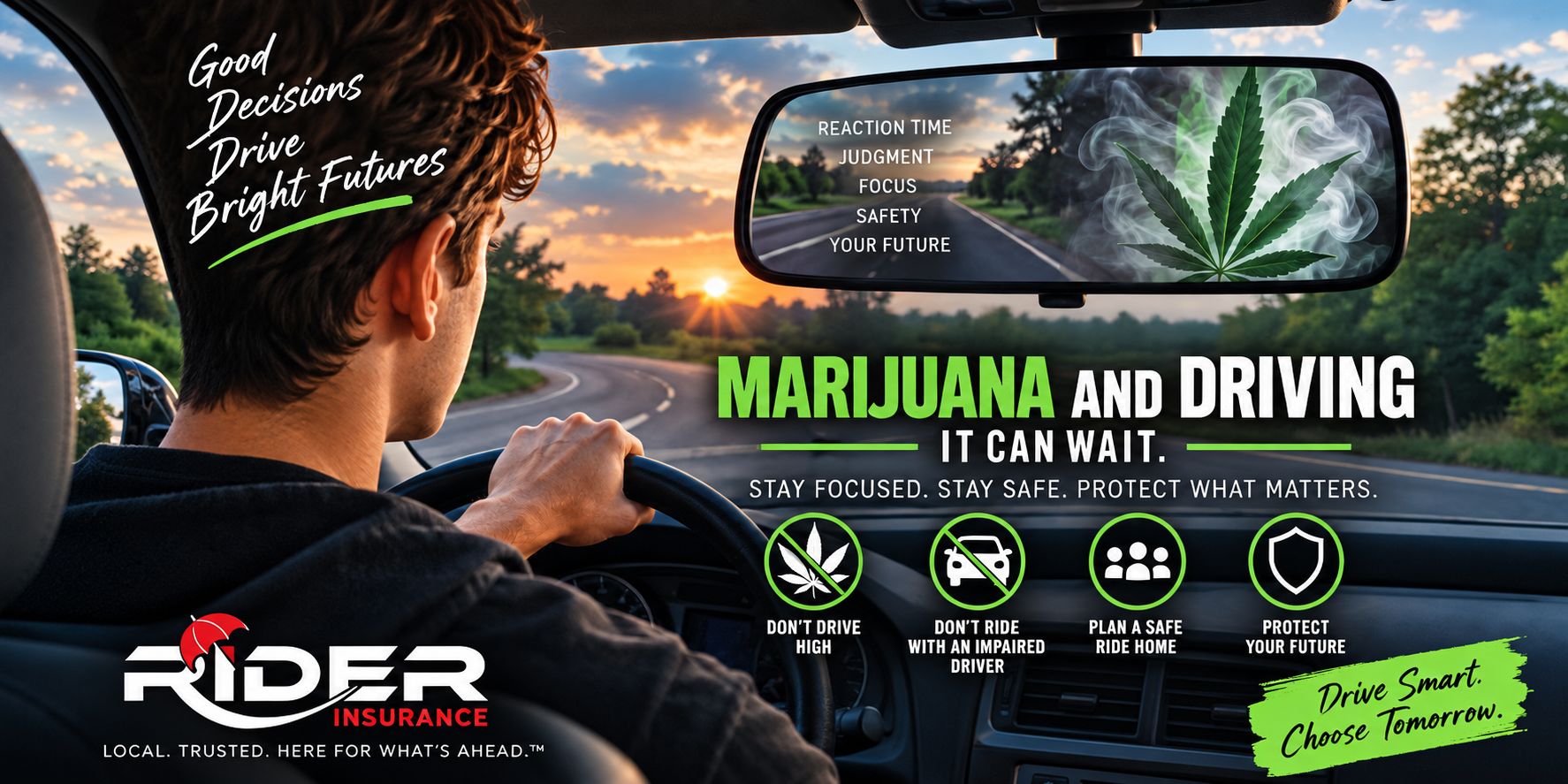
Getting your driver’s license is a major milestone. For a student driver, it means more independence, more responsibility, and the need to make smart decisions every time you get behind the wheel.
One decision should be especially simple:
If marijuana could be affecting your ability to drive, don’t drive.
Cannabis can affect reaction time, coordination, concentration, perception, judgment, and decision-making. Those abilities aren’t optional when you’re operating a vehicle they are essential to responding to traffic, pedestrians, changing road conditions, and unexpected hazards. (
CDC)
And in Maryland, using cannabis legally does not make driving while impaired legal.
Is It Illegal to Drive Under the Influence of Marijuana in Maryland?
Yes.
Maryland law prohibits driving while a person is impaired by a drug to the point that they cannot safely operate the vehicle. Maryland’s Cannabis Administration also specifically states that driving while impaired by cannabis remains illegal. (
Maryland Cannabis Administration)
That distinction matters.
Legal cannabis use and legal driving are two different issues.
A person can legally purchase or possess cannabis under Maryland law and still face legal consequences if they drive while impaired.
Maryland’s official cannabis guidance also warns that cannabis can interfere with coordination, judgment, reaction time, concentration, and decision-making. (
Maryland Cannabis Administration)
Why Marijuana Can Make Driving Dangerous
Driving requires a driver to process a tremendous amount of information almost continuously.
You have to:
Cannabis can interfere with several of these abilities.
According to the CDC, cannabis can slow reaction time and decision-making, impair coordination, and distort perception. (
CDC)
NHTSA likewise identifies impaired coordination, judgment, reaction time, lane tracking, and cognitive performance as concerns associated with marijuana use. (
NHTSA)
For a driver who is still learning, those problems can be particularly concerning.
Why Student Drivers Need to Be Extra Careful
A new driver is still developing experience behind the wheel.
Student drivers are learning how to recognize hazards, judge following distances, manage intersections, change lanes, merge into traffic, and respond to unexpected situations.
That makes maintaining full attention particularly important.
The CDC identifies marijuana as a substance that can negatively affect judgment, motor coordination, decision-making, and reaction time in teen drivers. Marijuana use before driving has also been associated with increased motor-vehicle crash risk. (
CDC)
The safest approach for a student driver is therefore straightforward:
Don’t experiment with driving and impairment.
There is no benefit to discovering how marijuana affects your driving skills while you are sitting behind the wheel.
“I Don’t Feel High” Doesn’t Mean You’re Ready to Drive
One of the biggest problems with impaired driving is that the driver may not accurately recognize the degree of impairment.
NHTSA warns that impaired drivers cannot reliably assess their own impairment. (
NHTSA)
That means asking yourself:
“Have I used something that could affect my ability to drive safely?”
If the answer is yes, don’t take the chance.
What About Marijuana Edibles?
Edibles deserve special attention.
The effects of cannabis can differ depending on the product, the person, and how cannabis was consumed. Maryland’s cannabis guidance warns that intoxicating effects can last longer than expected and that effects from edibles can be delayed. Maryland advises waiting at least six hours after consuming cannabis before driving, while recognizing that individual effects can vary. (
Maryland Cannabis Administration)
That means student drivers should never use a six-hour rule as a guarantee that they are safe to drive.
If you still feel impaired, don’t drive.
If you’re uncertain, don’t drive.
Find another way home.
7 Smart Rules for Student Drivers
1. Never drive while impaired by marijuana.
If cannabis has affected your judgment, coordination, concentration, reaction time, or perception, stay out of the driver’s seat.
This is not the time to test your limits.
2. Don't ride with an impaired driver.
Your driver’s responsibility doesn’t end when you’re the passenger.
If a friend has used marijuana and wants to drive, speak up.
Find another ride.
Getting home safely matters more than avoiding an awkward conversation.
3. Make your transportation plan before using cannabis.
Don’t wait until you’re ready to leave.
Decide beforehand who will drive, whether you will use a rideshare service, whether a sober family member can pick you up, or whether you should stay where you are.
Planning ahead removes the temptation to make a bad decision later.
4. Never mix marijuana and alcohol before driving.
Using cannabis and alcohol together can increase impairment. (
CDC)
For student drivers, there is no reason to take that risk.
If you’ve consumed either substance or both don’t drive.
5. Don't let your friends make the decision for you.
You may hear:
“You’re good.”
“It’s not that strong.”
“We’re only going a few blocks.”
“I’ve driven like this before.”
None of those statements tell you whether you can safely operate a vehicle.
Your decision should be based on safety not peer pressure.
6. Parents should create a no-questions-asked safety plan.
Parents of student drivers can make a huge difference by establishing a clear rule:
“If you cannot safely drive home, call me. I will come get you.”
That doesn’t mean there should never be consequences for breaking family rules.
It means your child knows that getting home safely comes first.
7. Put the keys away when you're not fit to drive.
Sometimes the safest driving decision is deciding not to drive.
Put the keys somewhere else.
Give them to a sober person.
Arrange transportation.
Wait.
The vehicle will still be there later.
Marijuana Isn't the Only Source of Impaired Driving
Student drivers should also understand that impairment isn’t limited to marijuana and alcohol.
Some prescription medications and over-the-counter medications can cause drowsiness, dizziness, impaired coordination, or other effects that interfere with driving. NHTSA recommends understanding medication warnings before getting behind the wheel. (
NHTSA)
A responsible driver pays attention to anything that could affect their ability to operate a vehicle safely.
A Student Driver's Pre-Drive Check
Before you put the car in gear, ask yourself:
Am I alert?
Have I used marijuana, alcohol, or another substance that could impair me?
Have I taken medication that may affect my driving?
Am I too tired to concentrate?
Is my phone put away?
Are my passengers wearing seat belts?
Do I have a safe transportation plan if I shouldn’t drive?
If something is interfering with your ability to drive safely, don’t drive.
Safe Driving and Responsible Insurance Go Hand in Hand
Insurance can help protect you financially when covered losses occur, but no insurance policy can undo the consequences of a serious impaired-driving crash.
The first line of protection is the decision made before the vehicle moves.
At
Rider Insurance, we help Maryland drivers understand their auto insurance options and the protection available for their vehicles, families, and finances. Rider Insurance is an independent agency serving Maryland and surrounding states.
Rider Insurance
If you’re a new driver or a parent adding a student driver to your household, it’s also a good time to review your automobile insurance coverage.
Learn more about your auto insurance options
The Bottom Line
Marijuana and driving are a dangerous combination.
Cannabis can affect the skills drivers depend on most—including reaction time, coordination, perception, concentration, judgment, and decision-making. (CDC)
For student drivers, the lesson should be simple:
Don’t drive impaired.
Don’t get behind the wheel because someone says you’re “fine.”
Don’t ride with someone who is impaired.
And don’t wait until you’re standing next to the car to figure out how you’re getting home.
Plan ahead. Make the safe choice. Protect yourself, your passengers, and everyone else sharing the road.